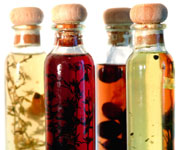
This is probably the most frequently asked question I receive. I have always made a point to stay clear of vegetable oil due to its many health problems it can cause. Here is a list of oils that I use regularly in my kitchen and why I use them. I make a point to keep all of these oils in my cupboard.
1 - Grapseed Oil: This is a great oil for lowering cholesterol. It has a very light taste and I use it a lot in place of Olive Oil. Smoke Point 420 degrees.
2 - Peanut Oil: This oil has been shown to reduce heart disease. It contains resveratrol, which is found in grapes and red wine and helps reduce cardiovascular disease and reduce cancer risk. Peanut Oil can be used in MANY ways such as pop corn, frying foods, to saute or grill foods. Smoke Point 460 degrees.
3 - Walnut Oil: This oil has also been shown to reduce heart disease but in a different way. This oil lowers triglycerides. This is a great oil to sprinkle on salads. You can also finish off your chicken or fish plates with this oil. Smoke Point 400 degrees.
4 - Sesame Oil: This is a great oil for providing Vitamin E. Vitamin E is an anti-oxidant which means it helps lower cholesterol. Sesame oil also contains magnesium, copper, calcium, iron and vitamin B6. It is also a VERY popular oil in Asian foods. My family loves to eat Stir Fry's and we use this quite often in them.
5 - Flaxseed Oil: This oil if full of Omega-3's Fatty Acids. As a matter of fact, flaxseed oil provides the highest concentration of these fats of any non-fish food. The fatty acids make arteries more flexible, reduce inflammation in the arteries, reduce blood clots and even lessen the chance of fatal heart attacks. This is a great oil to add to salads. This is an oil that needs to stay refrigerated as heat destroys the omega-3's. Smoke Point 225 degrees.
6 - Rice Bran Oil: This is an excellent healthy alternative all around. This oil has a really high flash point which prevents the nutrients to break down when cooking at high temperatures. This is probably the most versatile oil on the market and closest to AHA recommendations overall. Smoke Point 490 degrees.
7 - Olive Oil: I could never leave out olive oil. It is one of my favorites. Although it may not be known to prevent any major illnesses it is a superior oil to saute with or use in salads. Smoke Point 325 degrees.
8 - Almond Oil: This is one of my favorite to bake with. This can be very tasty on proteins while frying as well. Smoke point comes in at 495 degrees.
9 - Safflower Oil: This is a great oil for rice dishes as well as your proteins such as fish or chicken. It has a light taste and the Smoke Point is 450 degrees.
10 - Sunflower Oil - This is one of my favorites to use on vegetables. This oil has a low saturated fat level and can withstand high heat. I love this oil with Zucchini. Smoke Point is 460 Degrees.
Showing posts with label Tips. Show all posts
11/09/2010
11/06/2010
Tip # 3 How to avoid Tearing with Onions
I have noticed that many stores now sell goggles for cooks to use when cutting an onion. Why waste your money when there is a simpler way to avoid the tears. Here is a simple trick for avoiding the tears all together when cutting an onion. Store your onions in the refrigerator for at least 24 hours prior to cutting into them and you will have little to no tears at all when cutting into it. It is just that easy.
Labels:
Tips
10/08/2010
Tip # 2 Removing Corn from the Cob
Not all of us enjoy eating corn on the cob. Although it is one of my favorite sides to prepare for my family, there was a time that I lived with my parents and I had to accommodate my father since he refused to eat corn on the cob. Whether it was from pain with his gums or being cautious with his teeth, I would have to remove the kernels from the cob. I have noticed many kids requesting this as well in restaurants and at friends houses. It is a fairly simple task and when you find a set up that works like a charm it makes things go a bit more smoother. This is a fairly easy and straight to the point tip on stripping your corn on the cob.
Tip # 2 Removing Corn from the Cob
Using a bundt pan place a dish towel around the center hole of the pan to protect it. Place your corn upright with the tip of the cob in the center hole of the bundt pan. Be sure to hold the cob steady and using a sharp knife make long downward strokes in order to separate the kernels from the cob. Using the dish towel to protect the stick free interior from any damage in case you slip while removing the kernels.
Now that the old fashioned method is out of the way, here is another way to remove the kernels from the cob with one easy tool and no risk to any bundt pans. Kuhn Rikon Corn Zipper makes things easy and it is very similar to our already used vegetable and fruit peeler you may already have in your kitchen. This is a very inexpensive addition and makes perfect sense to have if you and your family love fresh corn.
Labels:
Tips
10/05/2010
Tip #1 Cooking Pasta
I have decided to include random tips about cooking. Some, possibly even most may already know these tips but many new chefs are unaware of them and I can't help but remember when I first started cooking. I called my mom regularly to ask how to do some of the easiest things. I like to think that I have expanded my cooking knowledge ten fold since then and I can only hope that it gets better over time. Enjoy the tips and I hope they help.
Cooking Pasta:
Many people are unaware how to measure pasta and tend to have a large amount of left overs when they make it. Here is a starter tip. If you are serving pasta as a main course you should use 4 oz per person. A one pound box of pasta is enough to serve 4. You would cut that number in half if you are serving the pasta as a side dish. In other words, it would be 2 oz per person.
You want to bring your pot of water to a rolling boil before adding any pasta. Once you have your water boiling you will want to add salt. Add enough salt so that your water tastes like sea water. Be sure not to add your salt before the water boils.
Add your pasta all at once bending the long pasta into the water as it softens. Do not break your pasta to fit the pot. Once the water has come back to a boil turn down the heat a bit to prevent the water from boiling over. Boil the pasta al dente. This means that you want to cook it till it is slightly firm in the middle.
Do not add any oil to your water. Once you e pasta is added to the water your water level should be about 2 inches from the top. This will prevent it from boiling over. Adding oil will coat your pasta and prevent the sauce from sticking to them.
I have never followed the cooking times on the boxes since I have found them to be inaccurate. Best thing to do is to remove one strand of pasta and allow it to cool. Taste the cooled pasta and determine if it is to your liking. I personally like my pasta softer than al dente. It is all a matter of taste. Once it is finished drain the pasta in a colander. Some people like to preserve anywhere between 1/4 - 1/2 a cup of the cooking water to mix with their sauce.
Return the pasta to your pot (DO NOT RINSE PASTA WITH WATER) and add your sauce. You can then add your reserved cooking water to the sauce. Stir well and at this time you can add a splash of either heavy cream or olive oil to your sauce. The reason for adding reserved water and heavy cream or olive oil together is that it allows the sauce to thicken and coats the pasta better. I also reserve some sauce on the side. Once you serve your pasta onto the plates you can add a bit more sauce for those who like their sauce heavier.
If you are cooking fresh pasta, you will want to cook a few minutes less as it will cook faster than dried pasta. Another tip is to be very careful when stirring in your sauce with fresh pasta as it is very fragile.
Labels:
Tips
Subscribe to:
Posts (Atom)